
New York Fraud Defense Lawyers
Experienced Fraud Defense Lawyers for New York & Long Island
The defense against fraud charges requires a deep understanding of not only the legal definitions involved but also the intricacies of the specific allegations. It's vital to dissect the evidence meticulously to uncover any inconsistencies or misinterpretations that could favor the defense.
Additionally, expert witnesses may be brought in to challenge the prosecution's claims or to provide clarity on complex financial, technological, or business matters related to the allegations. These experts play a crucial role in breaking down technical details in a way that juries can understand, thus strengthening the defense's position.
Understanding the nuances of these charges is no small feat, making it essential to consult with experienced legal professionals who are well-versed in New York's legal landscape concerning fraud. If you need an adept fraud lawyer in New York, contacting us can provide the insight and support required for your defense.
To speak with our experienced New York fraud lawyers, give us a call at (888) 646-0025 or contact us online today. The initial consultation is free.
What is Fraud in New York
Fraud is a unique crime as it is one of the very few that rarely has a statute of limitations. In some jurisdictions, the statute doesn’t even begin until the fraud is discovered and law enforcement has an opportunity to evaluate what has happened and perform at least a cursory investigation.
That said, fraud is also a crime that can be very easily misinterpreted to include all manner of unethical actions that in themselves may be dishonest and even malicious, but don’t necessarily rise to the level of criminal fraud. Fraud is the crime of obtaining something of value through deception.
Even a non-lawyer can see where confusion can arise. What exactly is “something of value?” Money? Love? Happiness? New shoes? The definition can be different from person to person. One might value a camping trip while another would more likely value an evening reading.
Then there’s deception. The multiplicity of ways one or more people can be deceived is awe-inspiring. In some cases, a person can arrive at the wrong conclusion and accuse someone of deceiving them even if they had no intention of doing so. When these two vague concepts are combined, they create one of the most confusing and hard-to-pin-down crimes on the books.


Why We're the Right Choice
Attentive Service. Strategic Defense.
Raiser, Kenniff & Lonstein is here to help you get the results you need with a team you can trust.
-
Personalized Legal StrategyWe don’t believe in one-size-fits-all solutions. Every case is handled with a custom legal approach tailored to your goals, your circumstances, and your future.
-
Risk-Free Consultation
We offer a risk-free evaluation of your case and are here to help you understand your legal options. We are available 24/7, day or night, to help you.
-
Top-Rated Team
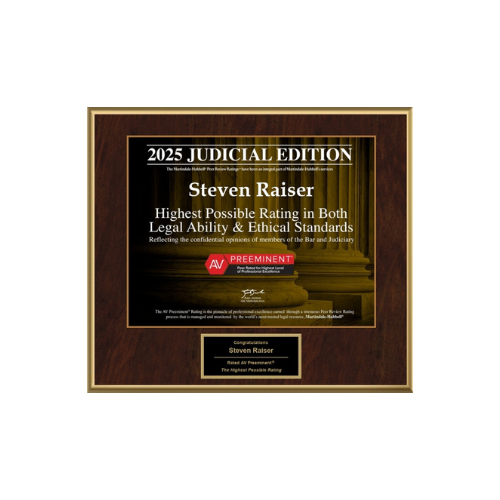
Nationally recognized for results. Our attorneys have been ranked among the best in the U.S., Trusted for their strategy, skill, and relentless client advocacy
-
Former ProsecutorsOur founding partners are both former New York prosecutors who bring unique experience and insights to every case, especially when it comes to going to trial.
.2512011325473.png "MARTINDALE-HUBBELL® 2025 Client Champion Gold")






Key Elements the Prosecution Must Prove
To secure a conviction, the prosecution must prove every element of the specific fraud statute beyond a reasonable doubt.
Our role as your fraud attorney in New York is to identify the missing links in their evidence:
- Intent to Defraud: This is the most contested element. Under New York law, "intent" must be proven. We often argue that our clients acted in "good faith," followed the advice of professionals, or simply made an error without any criminal aim.
- Materiality: The false statement or omission must be significant. If the alleged deception wouldn't have actually influenced the outcome of a transaction, it may not meet the legal threshold for fraud.
- The "Enterprise" Connection: For certain high-level charges, the State must prove the activity was part of an "enterprise." We challenge these links to prevent the prosecution from inflating simple misdemeanors into complex felonies.
Fraud is a classic chameleon defense, as it gives defense attorneys wide latitude to focus on the weakest part of the prosecution.
Is the defendant dead to rights on the facts? Then the defense will argue that those facts don’t meet the definition of “deception” and “value.” Will every member of the jury interpret the evidence as meeting those definitions? Then the defense can argue the defendant had no intent to deceive and therefore no intent to obtain anything of value through deception.
It is for this reason that a good defense attorney can often steer fraud cases away from trial and towards a favorable deal. Most prosecutors have little appetite for prolonged litigation over opinion.
Finding a defense attorney with experience in criminal fraud is vital, as working within the boundaries of this kind of case is highly valuable. Fraud is definitely a charge no person should even dream of facing alone.
Corpus Delicti in Fraud Defense
In fraud defense, one of the most critical early steps is evaluating whether the prosecution can establish the corpus delicti—the proof that a crime actually occurred. Unlike murder, for example, where physical evidence is often clear, fraud cases require proof of intentional deception and the acquisition of something of recognized value. Without these core elements, the foundation of the charge may be vulnerable.
Corpus delicti in fraud cases requires more than suspicion or accusations; it demands clear evidence of deceptive conduct that resulted in a tangible benefit. If prosecutors cannot show intent to deceive, actual deception, and a measurable gain, the defense gains substantial leverage. These concepts are legally complex and often misunderstood, even by experienced professionals, making them a focal point for strategic defense challenges.
An effective fraud defense carefully scrutinizes whether these foundational elements truly exist. By identifying gaps, inconsistencies, or ambiguity in the evidence, defense counsel can cast doubt on whether a crime occurred at all. At Raiser, Kenniff & Lonstein, our team focuses on exposing these weaknesses to protect clients from unsupported allegations and aggressively challenge the prosecution’s case at its core.


a Reputation For excellence
Read Our Client Testimonials
-
They treated me wonderfully and helped me out of a bind. I feel that this firm really cares.- Michelle A.
How Fraud Cases Are Handled in New York
The state of New York takes fraud cases very seriously, given their potential to disrupt financial and commercial activities. New York has established comprehensive statutes to prosecute various fraudulent activities, including sections specifically targeting securities fraud, tax fraud, and healthcare fraud.
The following steps are commonly involved when handling a fraud case in New York:
- Initial investigation: Authorities gather evidence, interview witnesses, and review documents before formal charges are filed.
- Filing of charges: If sufficient evidence is found, the district attorney or U.S. Attorney may file charges under applicable state or federal fraud laws.
- Pretrial proceedings: Both sides exchange evidence in discovery, submit motions, and appear for hearings in local courts such as the New York Supreme Court.
- Trial or plea negotiations: The case may proceed to trial, or the fraud defense lawyer in New York may negotiate with prosecutors for a resolution.
- Sentencing and appeals: If a conviction occurs, courts determine the sentence, and the accused may have the opportunity to appeal.
Understanding these legal intricacies is essential for anyone involved in a fraud case within New York. Engaging an attorney who is deeply familiar with local statutes and court systems is crucial because it enables a well-informed and strategic defense. From initial investigations to courtroom representation, knowledgeable legal counsel provides the necessary expertise to navigate the complexities of New York’s legal landscape for fraud.
Why Choose Raiser, Kenniff & Lonstein
When you are facing the full weight of the New York legal system, you need a firm that has a national reputation for excellence.
- Former Prosecutor Advantage: We have worked inside the DA’s offices and the Department of Justice. We know exactly where they look for evidence and how they build their pressure tactics.
- Over 100 Years of Combined Experience: Our team has handled hundreds of criminal trials and thousands of grand jury investigations.
- 24/7 Availability: We know that federal and state investigators don’t always wait for business hours to execute a search warrant. We are here when you need us.
- Free Consultations: We provide an honest, confidential, and risk-free evaluation of your case to help you understand your options in a complex legal landscape.
If you are under investigation for fraud, do not wait for the police to knock on your door. Contact a fraud attorney in New York at Raiser, Kenniff & Lonstein for a free consultation. As a former prosecutor who is available 24/7, we have the experience to protect your future. Call (888) 646-0025 or contact us online now.